
Web Application Development / London & Essex

Web Application Development

Give your customers or team a better way to get things done.

London & EssexScope agreed around your businessEvidence before assumptions
Service details

Illustrative order workflow

  1. 01

    Customer submits

    Validate the request and record an identifiable order with a clear status.

  2. 02

    Operator reviews

    Allow an authorised person to resolve missing information and approve the next state.

  3. 03

    Team fulfils

    Expose the information needed for the task, with controlled changes and useful documents.

  4. 04

    Exception is resolved

    Keep cancellation, correction and unavailable stock paths explicit rather than bypassing the workflow.

Our approach

Define the workflow your web application will improve

A custom web application is most useful when the business can describe the repeated task, the people involved and the limitations of the current process. We investigate those details before recommending a feature list.

An early release might cover one reliable end-to-end workflow rather than many unfinished screens. The scope identifies who can act, which data states are valid and how exceptions reach the person able to resolve them.

Plan application access and data handling

A customer, operator and administrator often need different views of the same information. Access rules and record ownership should be agreed alongside the interface. They are not details to add after a prototype looks complete.

Application documentation and support

We discuss imports, exports, deployment and operational support before launch. Acceptance should cover realistic work as well as invalid input and failures. Ongoing development can then be prioritised using what the business learns from the first useful release.

Discuss your target markets

Bird works from London and Essex with businesses serving nearby customers, the wider UK and international markets. We agree which of those audiences matters to this brief before recommending pages or campaigns. Contact the team to confirm meeting arrangements and bring the website, business priorities and any relevant constraints to the discussion.

Relevant work / In context

Relevant case studies

02 / Selected work

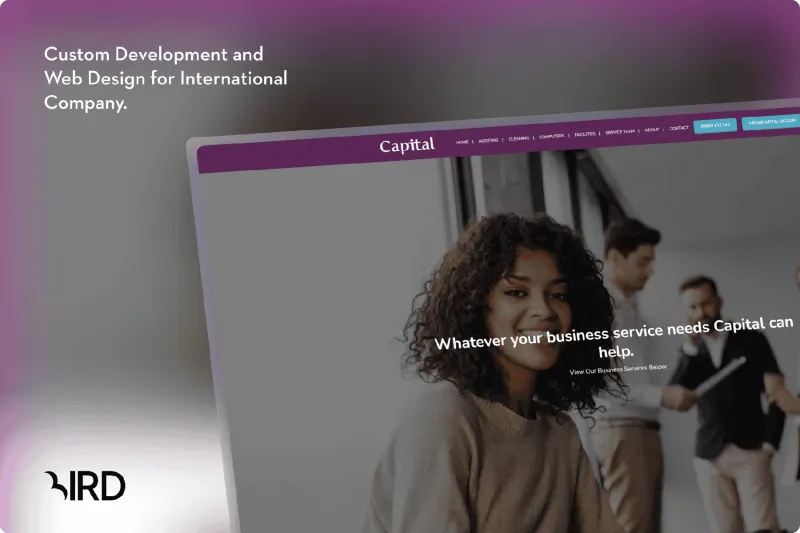
Capital

Custom Development and Web Design for International Company.

A customer and document portal provides another distinct application example.

Published project examples describe their own scope and period. They are not forecasts for a different business.

Frequently asked questions

What kinds of web applications can you build?

We discuss the specific workflow, users and data before proposing an application. Client portals, internal tools and bespoke online services have different requirements. A defined first release is easier to test and operate than an open-ended feature list.

Should we build a custom application or use existing software?

We compare the workflow with suitable existing tools and their limitations. A custom build needs a clear reason, ownership and maintenance budget. The investigation can identify whether an integration or smaller change would meet the need.

How do you plan user accounts and permissions?

We define user roles, the information each role can access and the actions they can perform. Those rules become implementation and test requirements. Account recovery, administration and handover also need to be included in the scope.

Can you migrate data from spreadsheets or another system?

Data migration can be included with a defined source, field mapping and validation process. We review quality, duplicates and ownership before import. The plan should explain how errors and records that do not match are handled.

How do you scope an initial release?

We identify the essential workflow, its exceptions and the users who will test it. Features are prioritised around that job. The agreed release includes acceptance checks and an operating plan rather than only a set of screens.

What ongoing costs should we plan for?

Hosting, third-party services, maintenance and future changes depend on the chosen architecture and usage. We identify those responsibilities during planning. The build proposal should distinguish delivery costs from ongoing operation.

Define the next step

Discuss your project.

Share your website, the problem you want to solve and any constraints. We’ll discuss the fit, the evidence needed and a scope before work begins.